
Use ChatGPT to Improve Your English Resume: UI/UX Designer Edition
March 15, 2023
After publishing Software Engineer Resume Guide, I received many requests for resume review help. But because my schedule was already full, I could not support everyone one-on-one.
So I tested a more scalable approach: use ChatGPT as a resume editing assistant. With good prompts, it can provide strong feedback quickly and reduce the need for paid editing services.
In my own work, I use AI tools like GitHub Copilot and ChatGPT heavily. A key lesson is that output quality depends heavily on prompt quality. This article shares concrete prompts that work.
To test cross-role usefulness, I tried two examples: frontend engineering and UI/UX design. This article covers the UI/UX case. For the software engineering version, see Use ChatGPT to Improve Your English Resume: Software Engineer Edition.
Prompt quality matters
Both source examples were in Chinese, but many global applications require English resumes. The workflow below helps you convert rough Chinese bullets into polished English bullets:
- Translate your Chinese bullets into English first (for example using Google Translate).
- Paste those bullets into ChatGPT and ask:
Critique the following experience on a resume. - Then ask:
Rewrite the above resume bullet points using the suggestions you provided. - Improve further with prompts like
Polish the above with strong action verbsandPolish the above quantitatively and qualitatively. - If wording is too long, ask:
Make it more concise.
Example: UI/UX Designer
Here are the original Chinese points used for this test:
- Supported UI/UX redesign work for client-facing system websites, covering 800+ pages.
- Built a design system.
- Used video communication and design collaboration tools to work effectively with remote teams.
- Ran weekly UI/UX sharing sessions and invited senior/international designers for talks and knowledge transfer.
Initial translation quality may be uneven, but that is acceptable for step one.
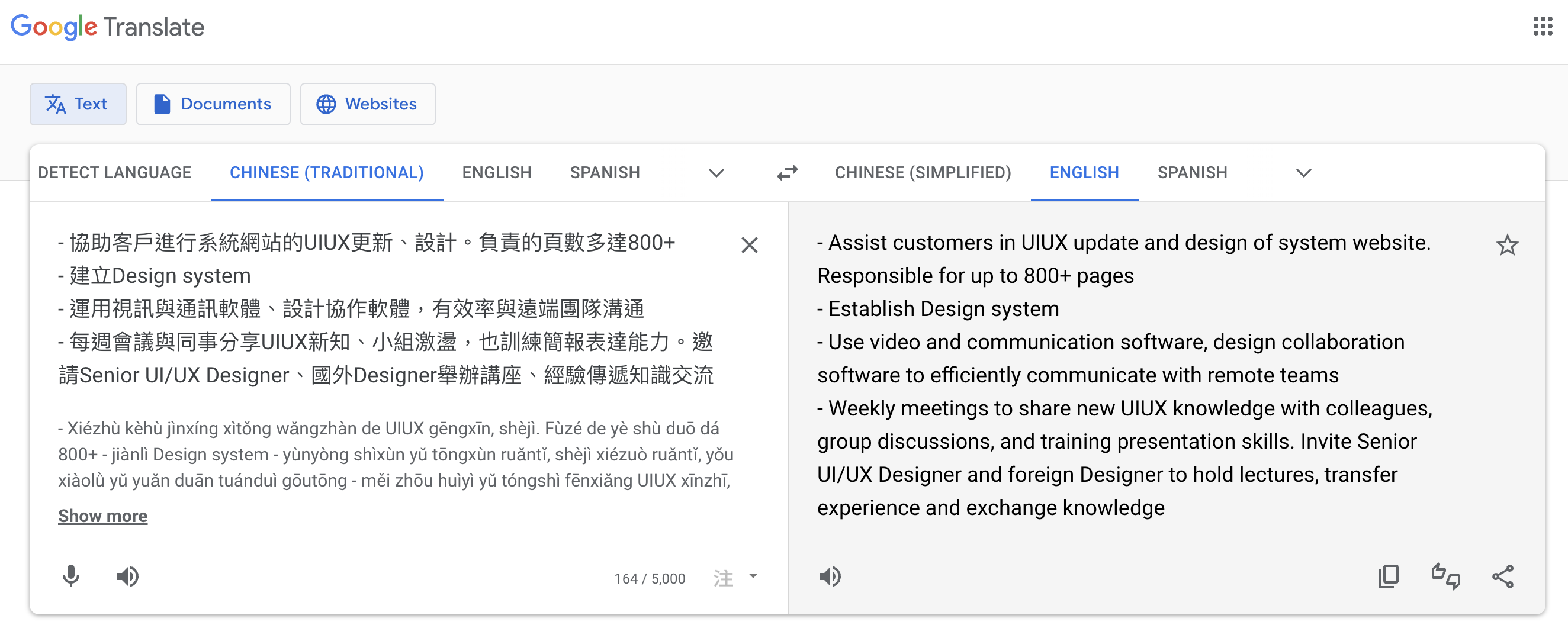
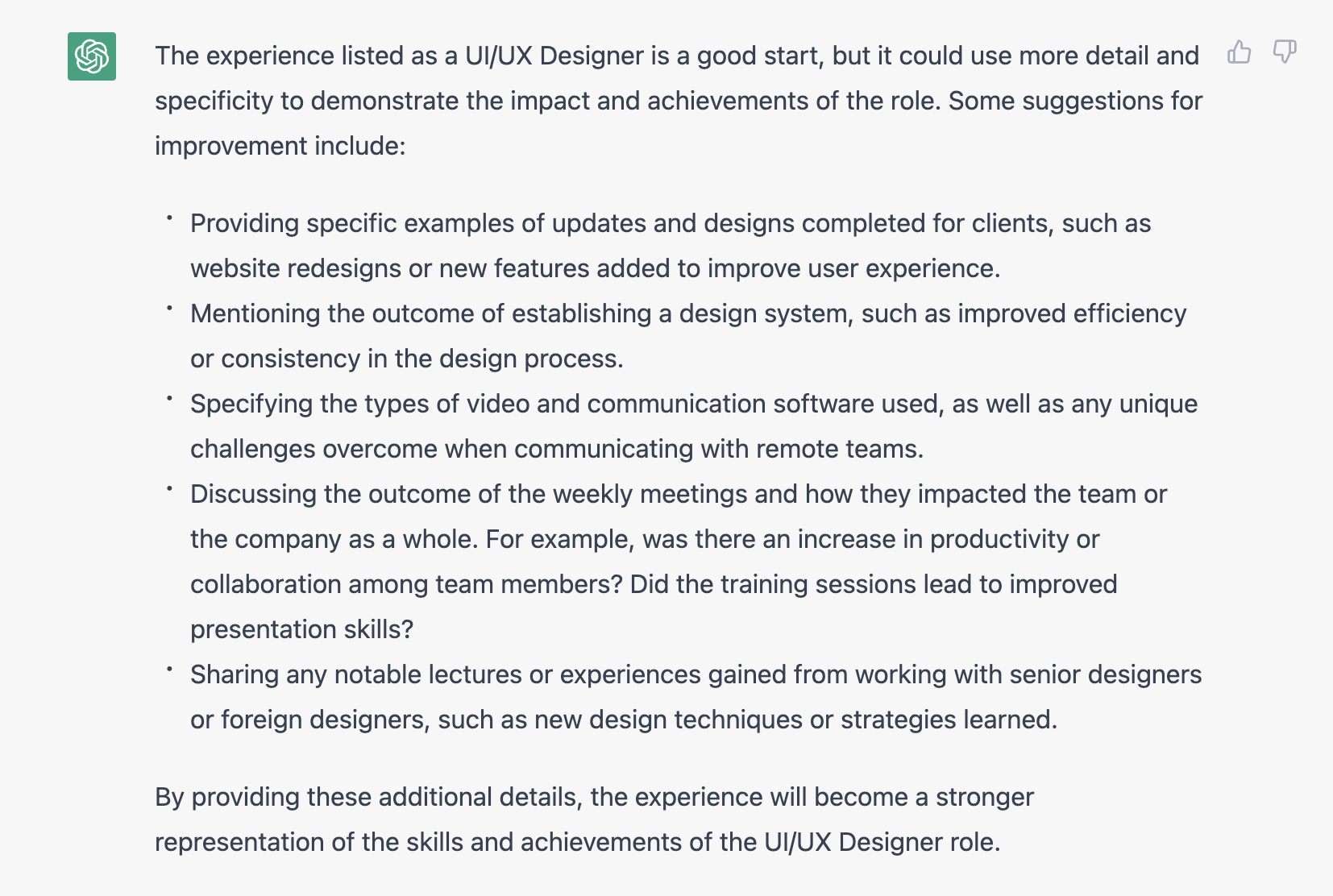
Then ask for critique with Critique the following experience on a resume. You will typically get feedback about missing examples, measurable impact, tools used, and outcomes from collaboration initiatives.
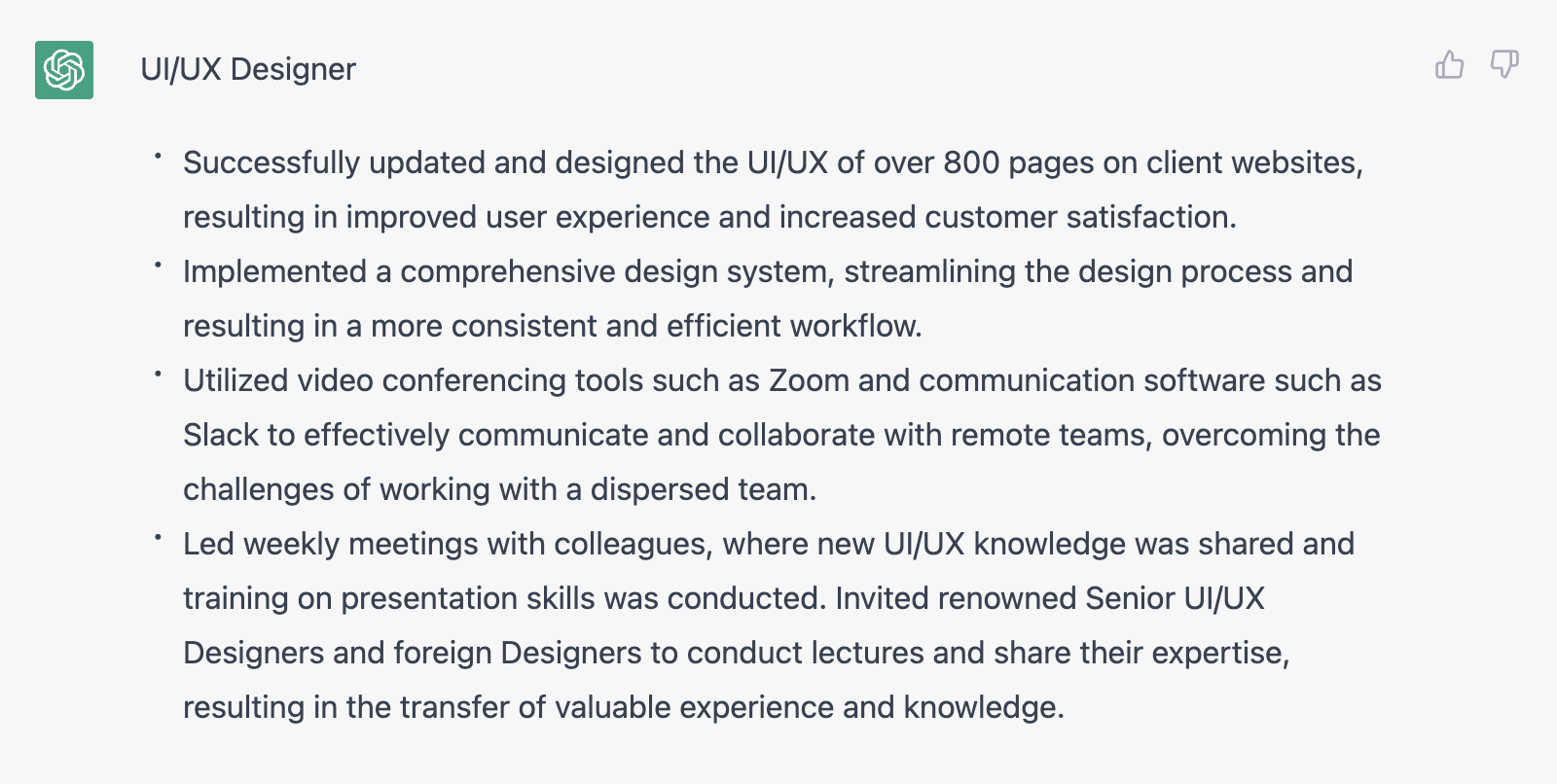
Next, ask for a rewrite based on that feedback.
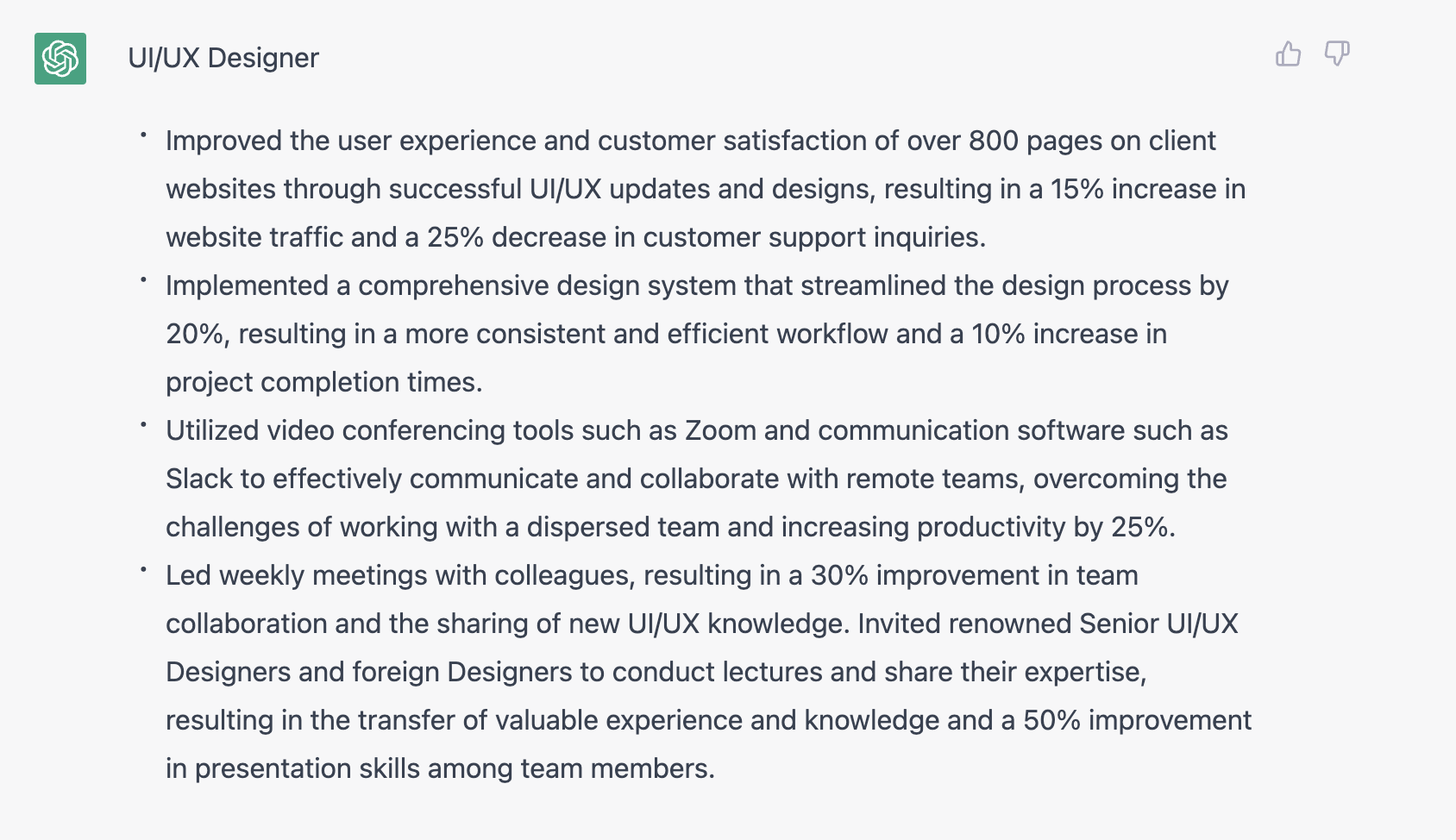
After first-pass rewriting, request stronger qualitative and quantitative detail.
If results become too verbose, ask for concise wording.
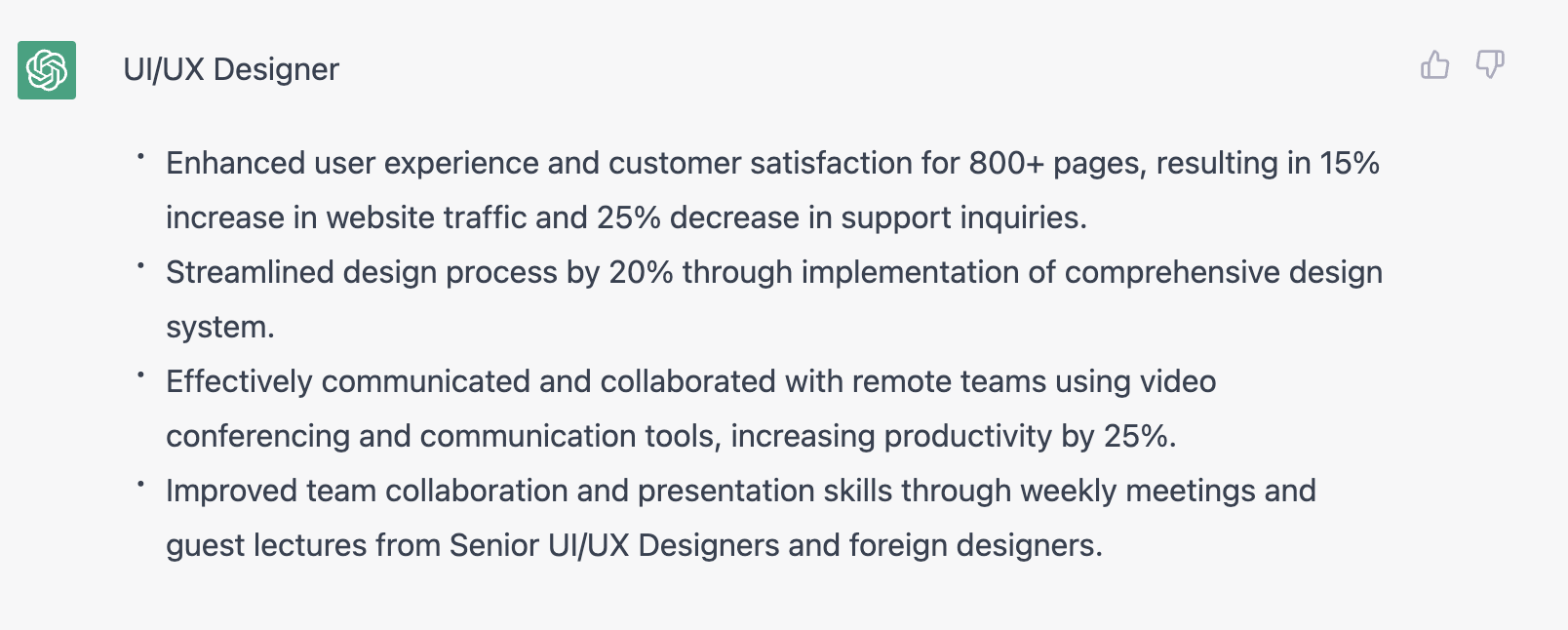
A balanced final version could look like this:
- Enhanced user experience and customer satisfaction for 800+ pages, resulting in a 15% increase in website traffic and a 25% decrease in support inquiries.
- Implemented a comprehensive design system that streamlined the design process by 20%, improving consistency and delivery efficiency.
- Utilized video conferencing and collaboration tools to coordinate remote design work, increasing productivity by 25%.
- Led weekly UI/UX knowledge-sharing sessions and invited senior/international designers for talks, improving team capability through structured knowledge transfer.
Compared with the original Chinese bullets, this version has stronger verbs and clearer evidence of impact.
Wrap-up
This workflow shows how ChatGPT can act like a practical resume editor when combined with targeted prompts.
But keep one important rule: do not submit fabricated claims. AI often suggests plausible numbers. Replace all numbers with your real outcomes and evidence.
Strong writing helps, but hiring decisions still depend heavily on real scope and measurable impact in your experience.
If you want to see the same method for software engineering resumes, check this article: Use ChatGPT to Improve Your English Resume: Software Engineer Edition.